
About TinMan Systems
TinMan Systems defines the real‑time mechanical intelligence layer for industrial automation.
Modern facilities operate as MIMO environments — many sensors, many mechanical behaviors, and
many simultaneous interactions across inanimate systems that must sense, interpret, and act
continuously. Yet the mechanical layer remains a blind spot in today’s automation.
The TinMan Platform synchronizes high‑frequency vibration, thermal, acoustic, video, positional,
and environmental data into a unified diagnostic stream that reveals the true mechanical state
of the equipment in real time. This gives operators a first‑person understanding of how their
automation is performing, drifting, and evolving.
Fifteen Years of Real‑Time Intelligent Design
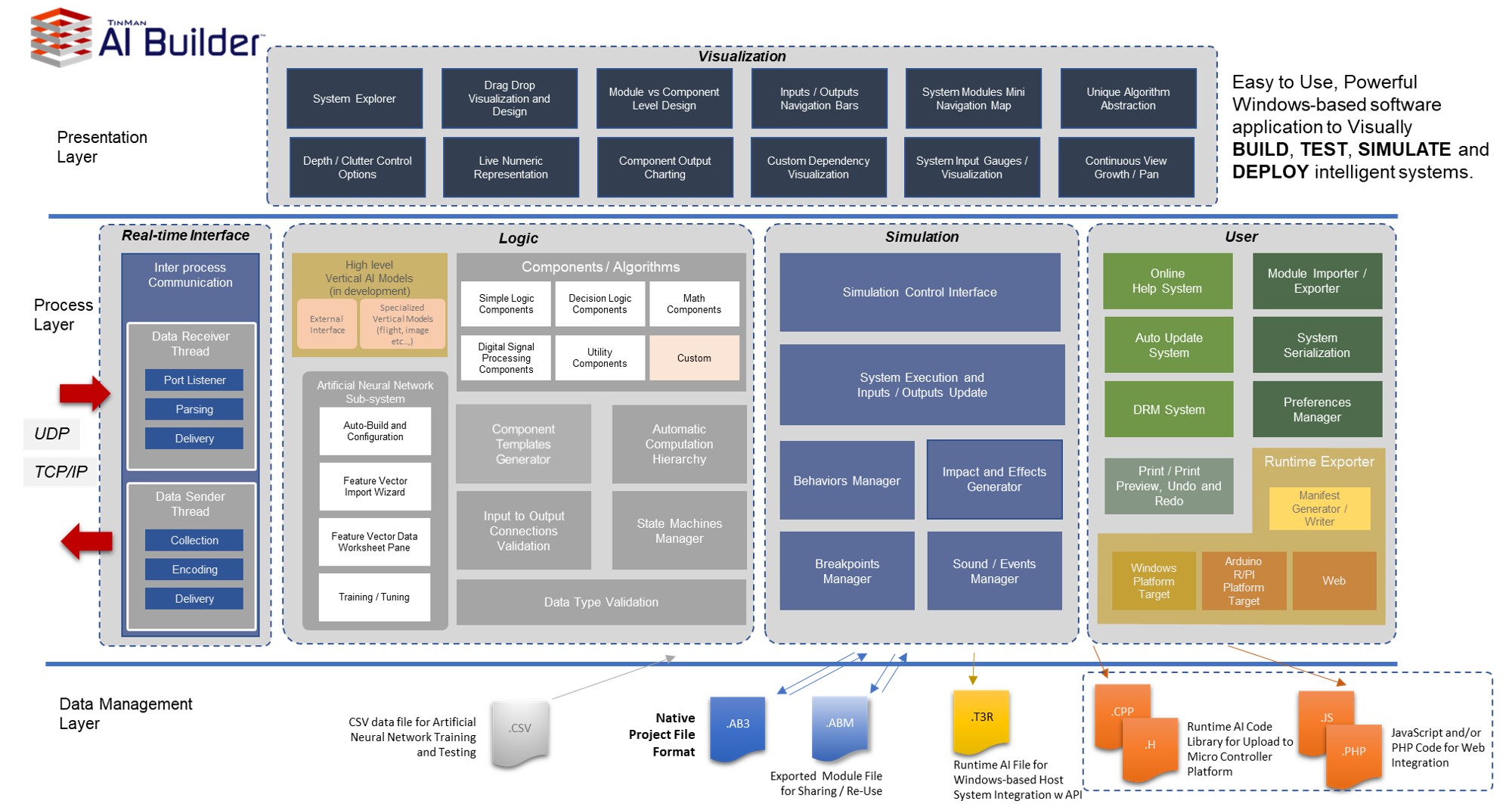
TinMan Systems was founded on a simple idea: real‑time intelligence should live inside the systems we rely on. Early research into structured decision‑making and multi‑sensor MIMO environments — work dating back to 2011–2012 — established the full‑circle loop that still guides TinMan today: inanimate systems sensing, fusing, interpreting, deciding, and acting in continuous real time.
What began as a suite of desktop intelligent‑system design tools has evolved into a unified, industrial‑grade real‑time AI platform powering high‑throughput automation across conveyors, sorters, and baggage systems worldwide.
Foundational Principles (2011–2012)
TinMan Systems’ early research focused on how complex electro‑mechanical systems make decisions in real time. Several principles emerged that still hold relevance today:
- iEMA as the atomic unit — intelligent actuators with multi‑sensor inputs and certified performance maps.
- MIMO complexity — real‑time decision making across many sensors and actuators.
- Hierarchical modular decision structures — role‑specific, non‑linear logic enabling simultaneous decisions.
- Multi‑sensor fusion — synchronizing internal and external sensor data to determine true system state.
- Embedded and updateable knowledge — performance maps and decision surfaces that evolve with system changes.
- Open architecture — standardized interfaces enabling scalable intelligence across diverse hardware.
Founder‑Led Engineering
The TinMan Platform — from its earliest architecture to its modern real‑time multi‑sensor engine — was authored and engineered by the founder of TinMan Systems. This continuity of vision ensures that every TinMan system is grounded in the same engineering philosophy introduced more than a decade ago: synchronized sensing, multi‑sensor fusion, real‑time interpretation, and intelligent decisions that reflect the true mechanical state of the system.
AI at the Core
TinMan’s real‑time intelligence layer doesn’t just collect data — it interprets it. By contextualizing multi‑sensor signals at operational speed, the platform exposes early‑stage mechanical drift, wear, and failure precursors long before they become visible externally.
A single sensor cannot diagnose a machine any more than a single symptom can diagnose a patient. Doctors rely on heart rate, temperature, blood pressure, history, and dozens of other inputs to understand what’s really happening. Machines are no different. Only a complete, synchronized set of vibration, thermal, acoustic, positional, and video signals can reveal the true condition of high‑throughput automation.
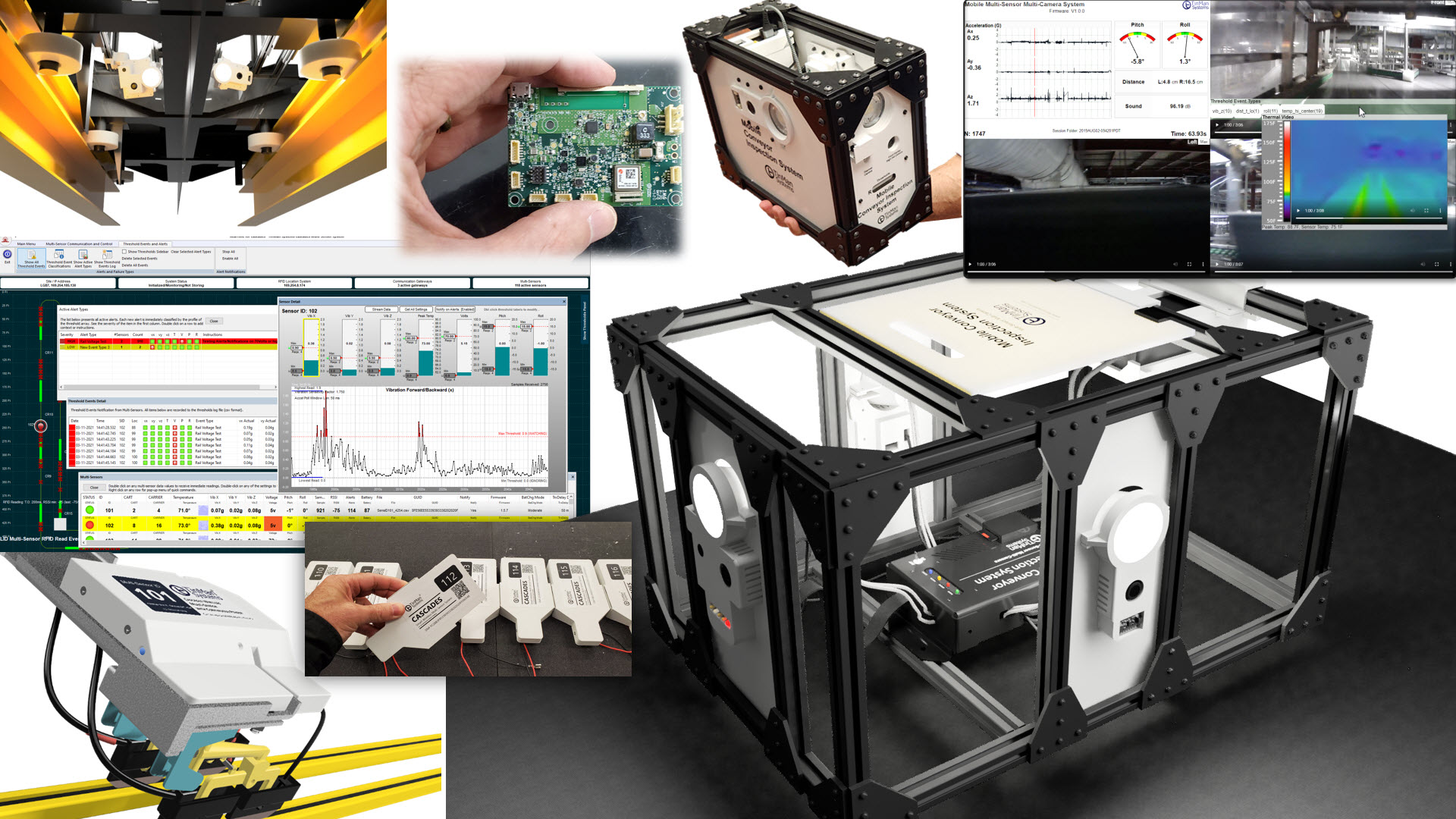
This AI foundation powers TinMan’s advanced multi‑sensor systems, including MCIS and Cascades, each engineered to capture the rich, synchronized data required for predictive maintenance at industrial scale.
Real‑Time Mechanical Intelligence in 2025
The core ideas from TinMan’s original architecture have become even more relevant as automation has accelerated. Today’s facilities operate with higher speeds, greater mechanical density, more autonomous subsystems, and more software orchestration layers — yet the mechanical layer still lacks real‑time self‑awareness.
This modern interpretation evolves the original architecture into a practical, deployable loop:
- Inanimate sensing — continuous vibration, thermal, acoustic, positional, and video signals.
- Synchronized multi‑sensor fusion — time‑aligned, context‑aware merging of signals across systems.
- Real‑time interpretation — non‑linear models identifying drift, degradation, and emerging failure modes.
- Intelligent decisions — system‑level recommendations and machine‑level insights.
- Actuation and operational influence — adjustments based on real‑time mechanical truth.
- Closed‑loop reinforcement — every action generates new sensor data, completing the MIMO cycle.
A Market Demanding Real‑Time Intelligence
Automation is expanding at a pace that demands smarter, faster, and more reliable sensing systems. Modern warehouses, robotics platforms, and high‑throughput logistics environments generate complex mechanical behavior that must be understood in real time to maintain uptime and throughput.
TinMan’s multi‑sensor systems — MCIS for mobile inspection and Cascades for continuous wireless monitoring — capture this behavior with precision. As global automation accelerates, TinMan Systems provides the real‑time sensing and AI interpretation layer that modern facilities rely on to maintain mechanical truth, operational clarity, and throughput.
Our Team
TinMan Systems is supported by a small, long‑tenured group of specialists who ensure the technology operates with the precision and consistency required in high‑throughput industrial environments. While the TinMan Platform was architected and authored by the founder, the team brings that technology to life in the field — assembling systems, validating performance, supporting deployments, and working directly with operators in real‑world conditions.
Every full‑time team member has been with TinMan Systems for six to ten years, developing a deep, practical understanding of the systems they build, test, and support. Their continuity and hands‑on experience enable TinMan Systems to move quickly, maintain high quality, and support demanding customer environments with confidence.
TinMan Systems also works with a small circle of trusted experts in embedded systems, firmware, and financial leadership. These specialists extend the company’s capability without adding unnecessary organizational overhead.
This combination of long‑term collaboration, practical engineering depth, and real‑world deployment experience enables TinMan Systems to deliver systems that are technically rigorous and field‑proven — a key reason our technology is trusted by Fortune 100 customers.
Founder’s Perspective
TinMan Systems was built on the belief that real‑time intelligence should live inside the systems we rely on — not in offline reports or after‑the‑fact analysis. When we first explored structured decision‑making and multi‑sensor MIMO environments more than a decade ago, the automation landscape looked very different. AI, robotics, and autonomous systems have advanced at an extraordinary pace since 2011, yet one thing hasn’t changed: automation continues to outpace its own diagnostics.
My goal has always been to give operators clarity — a direct, real‑time understanding of how their automation is behaving, where it’s drifting, and what it needs. TinMan Systems exists to make that possible by completing the full‑circle loop: sensing, fusing, interpreting, deciding, and acting at operational speed.
— Karl F. Hirsch, Founder & CEO
LinkedIn Profile
Leadership
TinMan Systems is led by founder, President, and CEO Karl Hirsch, a technologist with more than three decades of experience in AI, embedded systems, software architecture, and industrial sensing.
Karl pioneered early digital rights management and secure digital content distribution technologies in the late 1990s, reshaping how digital media and e‑commerce analytics were delivered. Over his career, he has helped raise more than $70 million for innovative startups and guided multiple companies through major growth milestones.
At TinMan Systems, Karl architected the company’s patented On‑Board Real‑Time Multi‑Sensor Diagnostics technology — a breakthrough that enables synchronized sensing and AI interpretation inside high‑throughput automation systems.
His vision continues to guide TinMan Systems’ mission: to give automated systems the ability to communicate their health in real time, empowering operators with the insight needed to maintain reliability, safety, and throughput.